



Forehead contouring with rhinoplasty is one of the most thoughtful approaches to comprehensive facial refinement available in aesthetic surgery today. When the forehead and nose are considered together rather than in isolation, the result is a more cohesive, naturally balanced appearance that no single procedure can achieve on its own. Patients throughout Beverly Hills and the greater Los Angeles area are increasingly seeking this combined approach as they research how surgical planning across multiple facial zones can yield more harmonious outcomes. If you are exploring whether this path is right for you, this guide is designed to help you understand the relationship between these two areas, what the process may involve, and what to look for in a surgeon. To begin a personalized conversation, contact Dr. Hassanzadeh today.
Why the Forehead and Nose Must Be Considered Together
The face is not a collection of independent features; it is a system of proportions that the eye reads as a whole. When evaluating facial aesthetics, surgeons trained in facial plastic and reconstructive surgery assess the relationship between the upper, middle, and lower thirds of the face. The forehead occupies the entire upper third, while the nose anchors the middle third. These two regions share a critical junction: the nasofrontal angle, the point where the bridge of the nose meets the brow area. A forehead that projects too much or slopes too steeply can visually distort the nose, making it appear larger, more prominent, or differently shaped than it actually is.
The Nasofrontal Angle and Aesthetic Balance
When planning forehead contouring with rhinoplasty together, a skilled surgeon evaluates the nasofrontal angle as a shared focal point. Adjusting brow prominence or forehead projection without accounting for the nasal bridge may shift aesthetic balance in an unintended direction. Conversely, rhinoplasty that refines a dorsal hump or adjusts bridge height changes how the forehead reads in profile. This interplay means that patients who want both procedures benefit from working with a surgeon who is trained to see and plan the face as a unified whole. Reviewing before-and-after photography in the facial plastic surgery gallery can help patients begin to visualize how these proportional relationships translate in real outcomes.
Patients researching this combined approach may also find it useful to explore related facial and neck surgery options in Beverly Hills to understand the full spectrum of refinements that can complement forehead and nasal work.
What Forehead Contouring with Rhinoplasty May Involve
Both procedures address distinct anatomical structures, and the specifics of each plan depend entirely on individual anatomy, goals, and candidacy. Forehead contouring may include brow bone reduction or augmentation, hairline adjustment, or soft tissue modifications designed to create a smoother, more proportionate upper facial frame. Rhinoplasty addresses the structure of the nose itself, including the bridge, tip, width of the nostrils, and the angle between the nose and upper lip. When planned together, the surgical approach accounts for how changes in one area will influence perception of the other.
Surgical Planning and Individual Anatomy
A thorough consultation is the foundation of any combined facial surgery plan. During this process, a fellowship-trained facial plastic surgeon will evaluate facial skeletal structure, skin thickness, soft tissue relationships, and the patient’s personal aesthetic goals. Imaging and facial analysis tools may be used to map the relationship between the forehead and nose in profile and from the frontal view. Patients with naturally heavy brow bones, a low forehead slope, or a prominent dorsal profile often find that addressing both zones in a coordinated plan produces results that feel more natural and less surgically obvious than treating each feature at a separate time.
For patients who are not yet ready for surgery or who are supplementing a surgical plan with non-invasive options, non-surgical cosmetic treatments in Beverly Hills may provide complementary support during recovery or in the months leading up to a procedure.
Candidacy, Recovery, and What to Expect from Combined Procedures
Patients who may be well-suited for forehead contouring with rhinoplasty are generally those in good overall health who have realistic expectations about surgical outcomes and understand that facial surgery is a process rather than an immediate transformation. Combining procedures in a single surgical session may reduce total recovery time compared to staging the surgeries separately, though this depends on the extent of the work planned and the surgeon’s clinical judgment. A thorough medical evaluation and open discussion of goals and health history are essential before any surgical plan is finalized.
Recovery Considerations
Recovery from combined facial surgery typically involves a period of swelling and bruising that is most pronounced in the first one to two weeks. Most patients find that the majority of visible swelling begins to settle within four to six weeks, though subtle refinements in the final result may continue to emerge over several months as tissues heal and settle. Following post-operative instructions carefully and attending all follow-up appointments supports a smooth recovery process. Individual results may vary based on anatomy, age, skin quality, and how closely post-operative care guidelines are followed.
Patients can also read firsthand accounts from others who have undergone surgical procedures by visiting the patient testimonials page for Dr. Hassanzadeh.
To review pricing and financing considerations for surgical procedures, the pricing information page offers a helpful starting point before your consultation.
Why Choose Dr. Tania Hassanzadeh for Forehead Contouring with Rhinoplasty in Beverly Hills?
Dr. Tania Hassanzadeh brings a depth of specialized training to forehead contouring with rhinoplasty that is shaped by years of dedicated focus on facial anatomy and surgical technique. She graduated with honors in Neuroscience from Duke University and earned her medical degree at the University of Arizona College of Medicine, where she was inducted into the Alpha Omega Alpha National Medical Honor Society for academic distinction. Her fellowship training was conducted alongside Dr. Jeffrey Spiegel at Boston Medical Center, one of the most recognized programs in facial plastic and reconstructive surgery. She also trained at Tufts Medical Center with a concentrated focus on facial and reconstructive procedures, and she served as an assistant professor in the Department of Otolaryngology, Head and Neck Surgery at Boston University Chobanian and Avedisian School of Medicine.
This combination of academic excellence, rigorous training, and faculty-level teaching experience positions Dr. Hassanzadeh as a thoughtful, skilled resource for Beverly Hills and Los Angeles patients seeking comprehensive facial refinement. Learn more about Dr. Hassanzadeh’s background and approach to understand what sets her practice apart.
Frequently Asked Questions
Is it common to combine forehead contouring with rhinoplasty in one surgery?
Combining these procedures in a single surgical session is an option that some patients and surgeons choose when both areas need attention. Doing so may reduce total recovery time compared to separate surgeries, and it allows the surgeon to plan proportional changes across the upper and middle face simultaneously. Whether combining procedures is appropriate for you depends on your anatomy, health history, and goals, which are discussed in detail during a consultation.
How do I know if my forehead is affecting the appearance of my nose?
This is one of the most valuable questions to bring to a consultation. A fellowship-trained facial plastic surgeon evaluates the nasofrontal angle and overall facial proportions to assess whether the forehead is contributing to how the nose reads in profile or from the front. Many patients are surprised to learn that what they perceive as a nasal concern is partly influenced by the forehead structure above it. A thorough facial analysis helps clarify this relationship before any surgical plan is made.
What makes a surgeon well-qualified to perform both forehead contouring and rhinoplasty?
Surgeons with fellowship training specifically in facial plastic and reconstructive surgery receive focused education in the anatomy, proportion, and technique relevant to both procedures. Dr. Hassanzadeh completed her fellowship training with Dr. Jeffrey Spiegel at Boston Medical Center and also trained at Tufts Medical Center with a concentration in facial and reconstructive surgery. This specialized background, combined with her academic faculty experience, reflects a rigorous preparation for complex, multi-zone facial procedures.
Are there non-surgical options that can complement forehead and nasal refinement?
Yes. For some patients, non-surgical treatments may serve as a complement to surgical planning or as a way to address adjacent concerns during the recovery period. Neuromodulators, for example, may help soften brow movement patterns that affect how the upper face appears at rest. Exploring the full range of Botox and neuromodulator treatments in Beverly Hills can help patients understand where non-surgical options may fit into a comprehensive facial plan.
How do I get started with a consultation for forehead contouring with rhinoplasty in Beverly Hills?
The best first step is scheduling a consultation with Dr. Hassanzadeh at her Beverly Hills practice. During that appointment, she will review your anatomy, discuss your goals, and help you understand which procedures may support the outcome you are hoping to achieve. You can also review the full range of surgical procedures available before your visit to familiarize yourself with the options. Contact the practice directly to schedule.
Schedule Your Forehead Contouring and Rhinoplasty Consultation in Beverly Hills
If you are exploring forehead contouring with rhinoplasty in Beverly Hills, Dr. Tania Hassanzadeh offers the fellowship-trained expertise and individualized approach that complex facial planning requires. Call or contact the practice online to schedule your consultation and take the first step toward a more balanced, harmonious facial appearance.
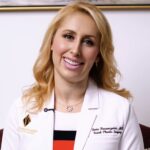
Dr. Tania Hassanzadeh
Dr. Tania Hassanzadeh, MD, is a fellowship-trained Facial Plastic & Reconstructive Surgeon based in Beverly Hills, CA. She earned her medical degree from the University of Arizona College of Medicine and completed rigorous training in Otolaryngology—Head & Neck Surgery at Tufts Medical Center. Dr. Hassanzadeh then completed dual fellowships in Facial Plastic & Reconstructive Surgery and Craniomaxillofacial Surgery, gaining expertise in rhinoplasty and facial reconstruction. Known for her warm and empathetic approach, she is dedicated to helping patients restore confidence and natural beauty through both surgical and non-surgical treatments, including facelifts, eyelid surgery, lip lifts, and injectables.