


Quick Links
What is a Blepharoplasty?
Blepharoplasty, or an eyelid lift, is a surgical procedure designed to address drooping eyelids, under-eye bags, and puffy under-eyes. By removing excess skin and fat and lifting the eyelids, Dr. Hassanzadeh can give you the refreshed, alert, and younger appearance you’re seeking. This procedure can even widen your field of vision if drooping eyelids are blocking your line of sight or peripheral vision.
There are different types of blepharoplasty: an upper blepharoplasty works to address concerns with the upper eyelids, a lower blepharoplasty addresses the lower eyelids, and a combined procedure improves both at the same time. Nuanced techniques that Dr. Hassanzadeh specializes in include pinch blepharoplasty, transconjunctival blepharoplasty, and fat repositioning.
A pinch blepharoplasty is when a small amount of skin is “pinched” and removed. This results in precise removal of only the necessary, redundant skin, without distorting eyelid position or underlying muscle.
Transconjunctival blepharoplasty is when a lower eyelid lift is performed through an incision on the inside of the eyelid, protecting the skin from any visible scars. This is best for addressing puffy under eyes with removal of fat and can be combined with a pinch blepharoplasty.
Fat repositioning is one of the latest advances in blepharoplasty. This adjusts the position of the fat around your eyes to smooth your tear troughs and resolve puffiness.
A blepharoplasty is often combined with a facelift, brow lift, and many other nonsurgical treatments to maximize your rejuvenation.
Patient Testimonial
I cannot recommend Dr. Tania Hassanzadeh highly enough! From my very first consultation, she made me feel comfortable, informed, and genuinely cared for. She has an incredible combination of expertise, experience, warmth, and positive energy that immediately puts you at ease. She took the time to answer every one of my questions… and never made me feel rushed. Her Beverly Hills office is beautiful, modern, and immaculate… Dr. Hassanzadeh personally greets you with a warm smile and walks you to your room, making you feel like you’re her only patient.
I had upper eyelid surgery (blepharoplasty), and I am absolutely thrilled with the results. Every time I look in the mirror, I smile. My eyes are even, bright, and beautiful. She removed exactly the right amount of skin… My eyes look refreshed, natural, and still look like me. It was exactly the result I was hoping for.
What impressed me most is her honesty and integrity. When I asked about other cosmetic procedures, she didn’t try to sell me something I didn’t need. Instead, she recommended a laser treatment for my fine lines… That kind of honesty is rare and shows that she truly puts her patients’ best interests first… I also appreciated that her pricing was very fair, especially considering the exceptional level of care, skill, and personal attention she provides. If you’re considering eyelid surgery or any cosmetic procedure, I wholeheartedly recommend Dr. Tania Hassanzadeh… I couldn’t be happier with my experience or my results, and I am so grateful I chose her.
What are the Benefits of a Blepharoplasty?
There are many benefits you can expect with a blepharoplasty or eyelid surgery, including the following:
- Boost in confidence: By reducing drooping eyelids, under-eye puffiness, and sagging skin, your new enhanced appearance will give you a huge boost in confidence.
- Wider field of vision: If sagging skin or drooping eyelids are blocking your field of vision, you’ll also be able to enjoy better vision as well.
- Younger appearance: By lifting your eyelids, removing sagging skin, and reducing under-eye bags, you will also look years younger with this procedure.
- Minimal scarring: Dr. Hassanzadeh will place the incisions within the eyelid crease and/or the lash line so you never have to worry about visible scarring.
- Long-lasting results: While a blepharoplasty can’t stop the aging process, you can expect the results to last for years to come.
The Blepharoplasty Procedure
The blepharoplasty procedure will begin with the administration of general anesthesia. From there, Dr. Hassanzadeh will make the appropriate incisions for your custom eyelid surgery. If it’s an upper eyelid surgery, incisions will be made along the natural crease in the eyelid. For a lower eyelid surgery, the incision will be hidden just below the lash line or inside the eyelid, away from sight.
From there, she will remove excess skin, muscle, and fat and reshape the area. She’ll then close the incisions, and you’ll be ready to start your recovery and healing process. The procedure can take anywhere from 45 minutes to two hours, depending on the type of blepharoplasty being done.
Blepharoplasty Recovery
After surgery, you might temporarily have blurred vision, dry eyes, swelling, bruising, and some discomfort. Dr. Hassanzadeh will prescribe pain medication to help with any discomfort and provide detailed instructions on how best to take care of your incisions and any side effects.
You’ll want to use cold compresses to help address swelling, use your prescribed eye drops or ointment, and lay with your head elevated. You’ll also want to avoid strenuous exercise for at least a week, direct sun exposure, smoking, and rubbing your eyes. Wearing glasses and contact lenses should also be avoided. Blood thinners will also need to be stopped to decrease the risk of bleeding.
You will start to see results in about 1-2 weeks, with full results visible after 3-6 months. Results last a lifetime, but after many years or decades pass, revision surgery may be needed for additional lifting.
Am I a Candidate?
Ideal candidates for blepharoplasty surgery are typically adults who are at least 30 years or older, in generally good health with realistic expectations, and with no eye conditions or recent eye surgery. We also recommend you be a nonsmoker. You should also be struggling with drooping eyelids, puffy under-eyes, or under-eye circles.
Schedule A Consultation
Tired of looking tired due to drooping eyelids and puffy under-eyes? Dr. Tania Hassanzadeh can help you refresh your appearance with a blepharoplasty. Want to learn more or schedule a consultation? Don’t hesitate to call our Beverly Hills office or send us a message using our online contact form. We can’t wait to help you look and feel your best!
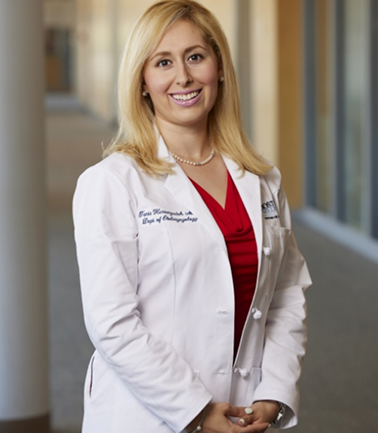
FACIAL PLASTIC SURGEON
Dr. Tania Hassanzadeh
Tania Hassanzadeh, MD, is a fellowship-trained Facial Plastic & Reconstructive Surgeon in Beverly Hills, CA. She graduated with honors in Neuroscience from Duke University in Durham, NC and completed her medical degree at the University of Arizona College of Medicine in Tucson, where she was one of few graduates inducted into the prestigious Alpha Omega Alpha National Medical Honor Society for top academic performance.
MEET DR. HFrequently Asked Questions About Blepharoplasty
Are there different types of blepharoplasty surgeries?
Can blepharoplasty fix asymmetry between the eyes?
What are the options for patients with thin or delicate eyelid skin?
Can blepharoplasty improve chronic eye irritation from eyelid sagging?
How do lifestyle factors like sleep, hydration, and sun exposure affect long-term results?
How is eyelid surgery performed?
Can a blepharoplasty affect your vision?
Are you put under anesthesia for eyelid surgery?
When can I wash my face after blepharoplasty?
Can you undergo blepharoplasty more than once?
How long does eyelid surgery take?
How long are eyes blurry after blepharoplasty?
Can I sleep on my side after eyelid surgery?
Why are my eyelids hooded?
What can I expect after eyelid surgery?
I have very hollow under-eyes; will lower blepharoplasty make them look even more sunken?
When can I comfortably wear makeup (specifically eyeshadow or liner) again after the procedure?
Can I combine my blepharoplasty with another facial procedure, like a Brow Lift or Facelift?
Can blepharoplasty help with dark circles?
Do blepharoplasty results look different for men compared to women?
Schedule a Consultation
Discover an even better you with the help of Dr. Hassanzadeh! Schedule a consultation today and start your journey toward looking and feeling your absolute best.